java
Senior Management
-
Joined
-
Last visited
-
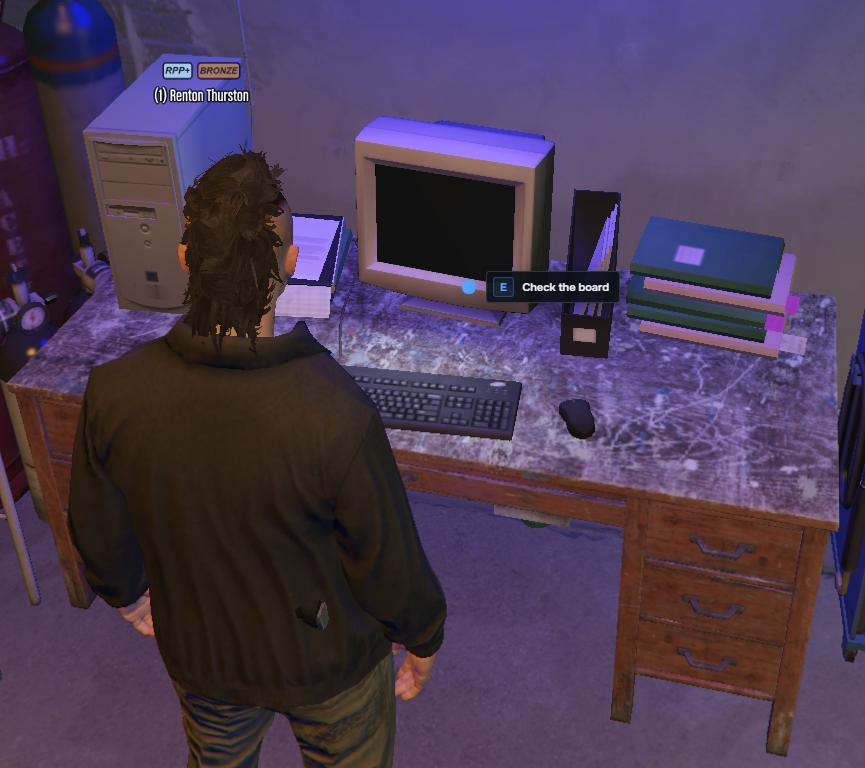
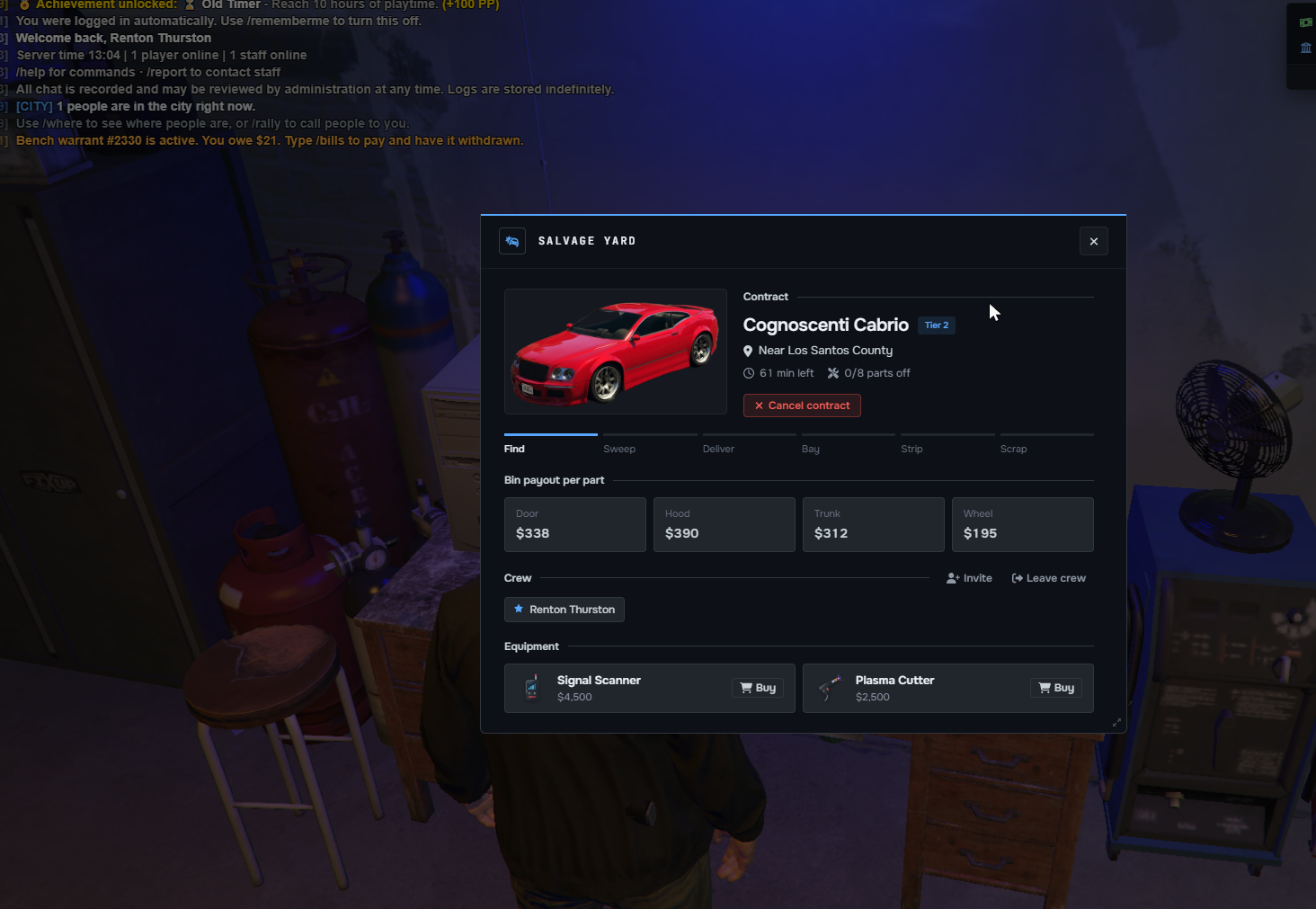
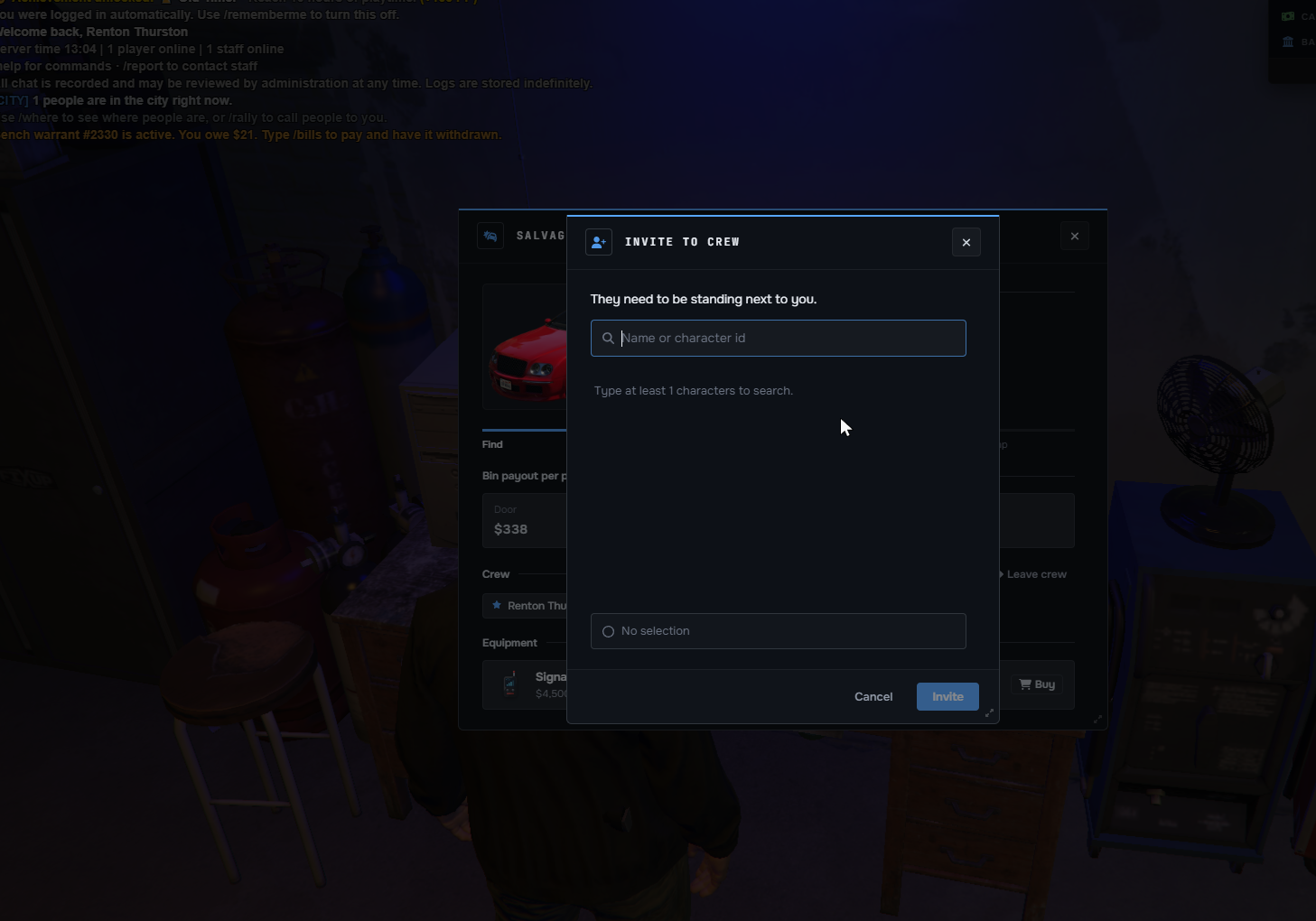
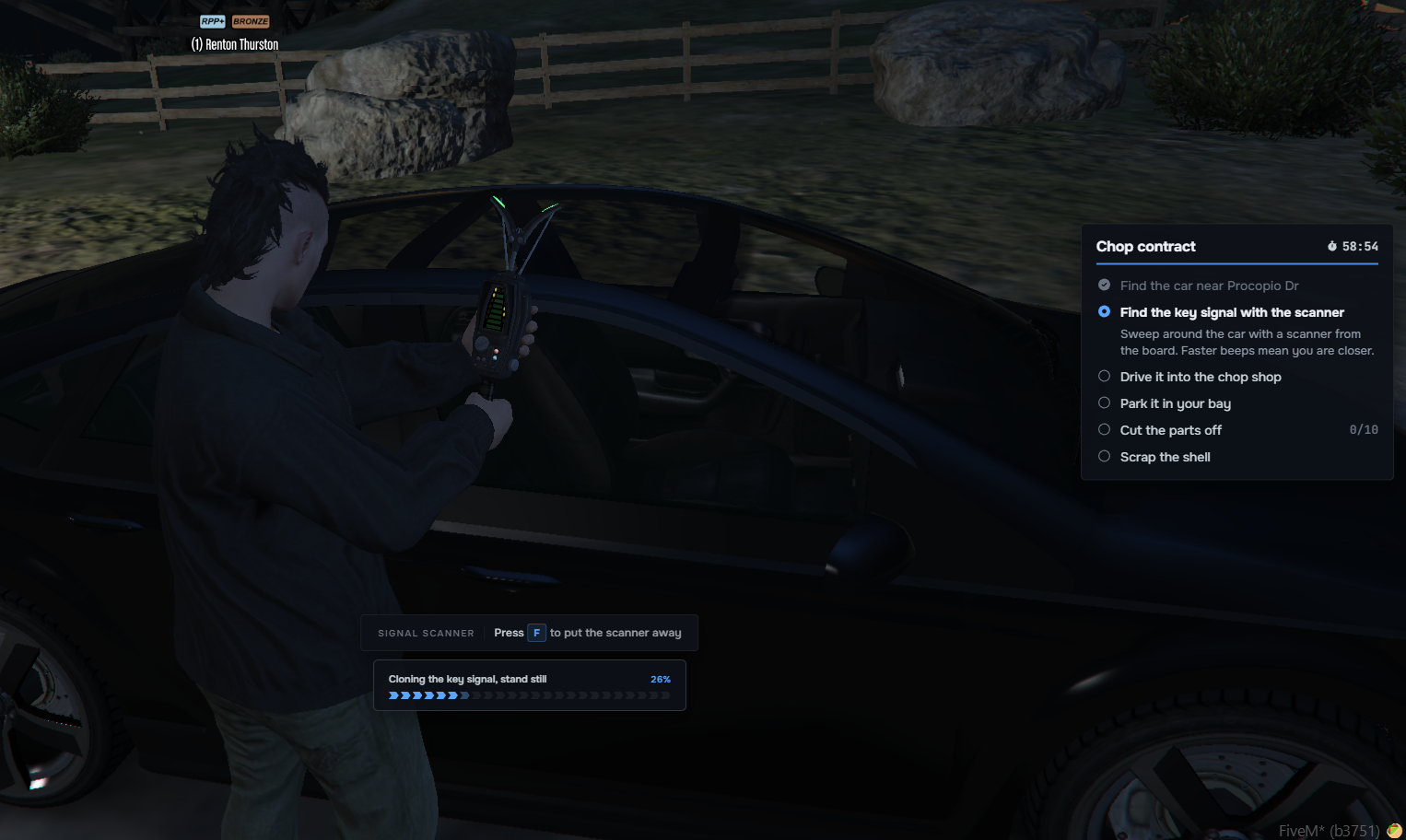
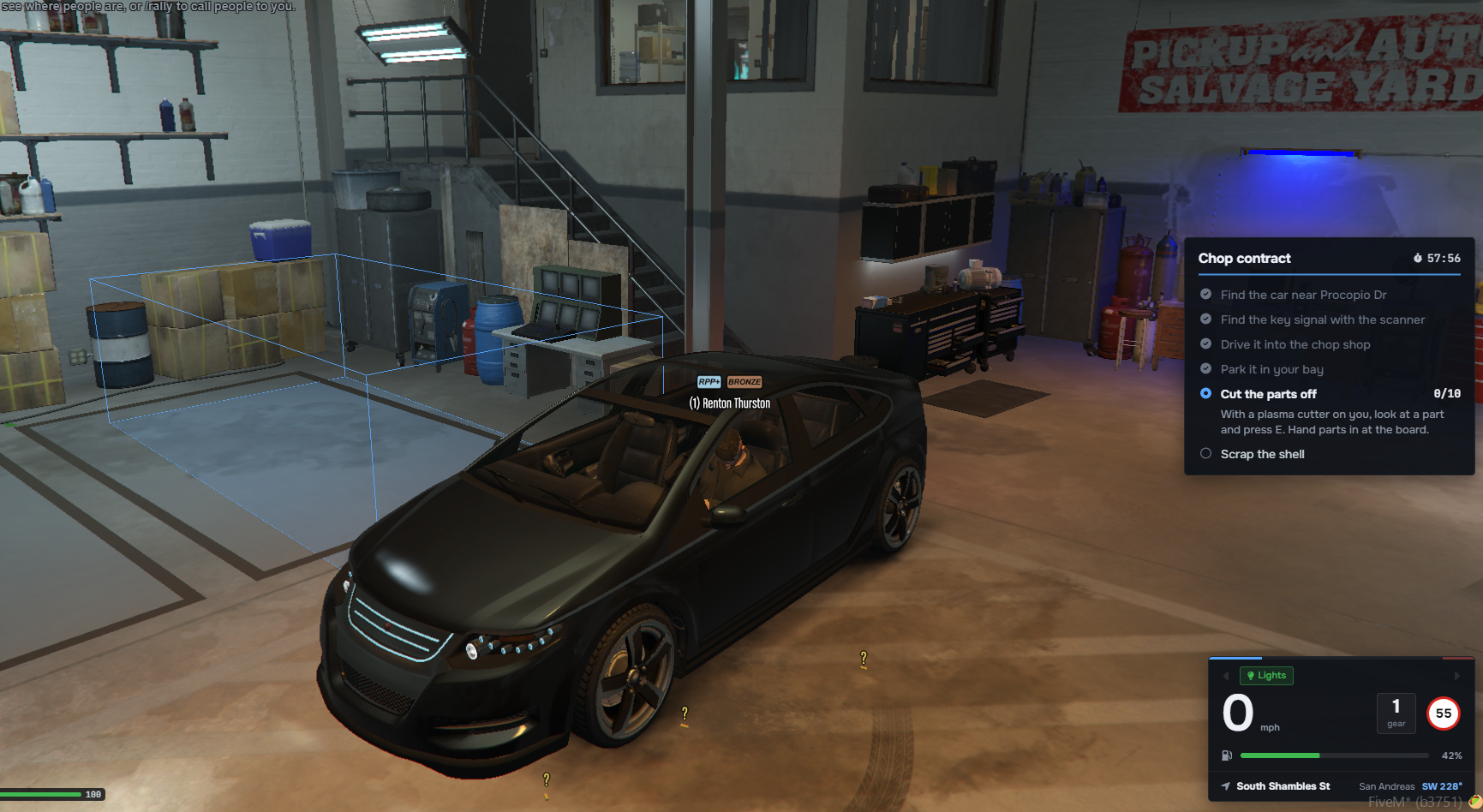
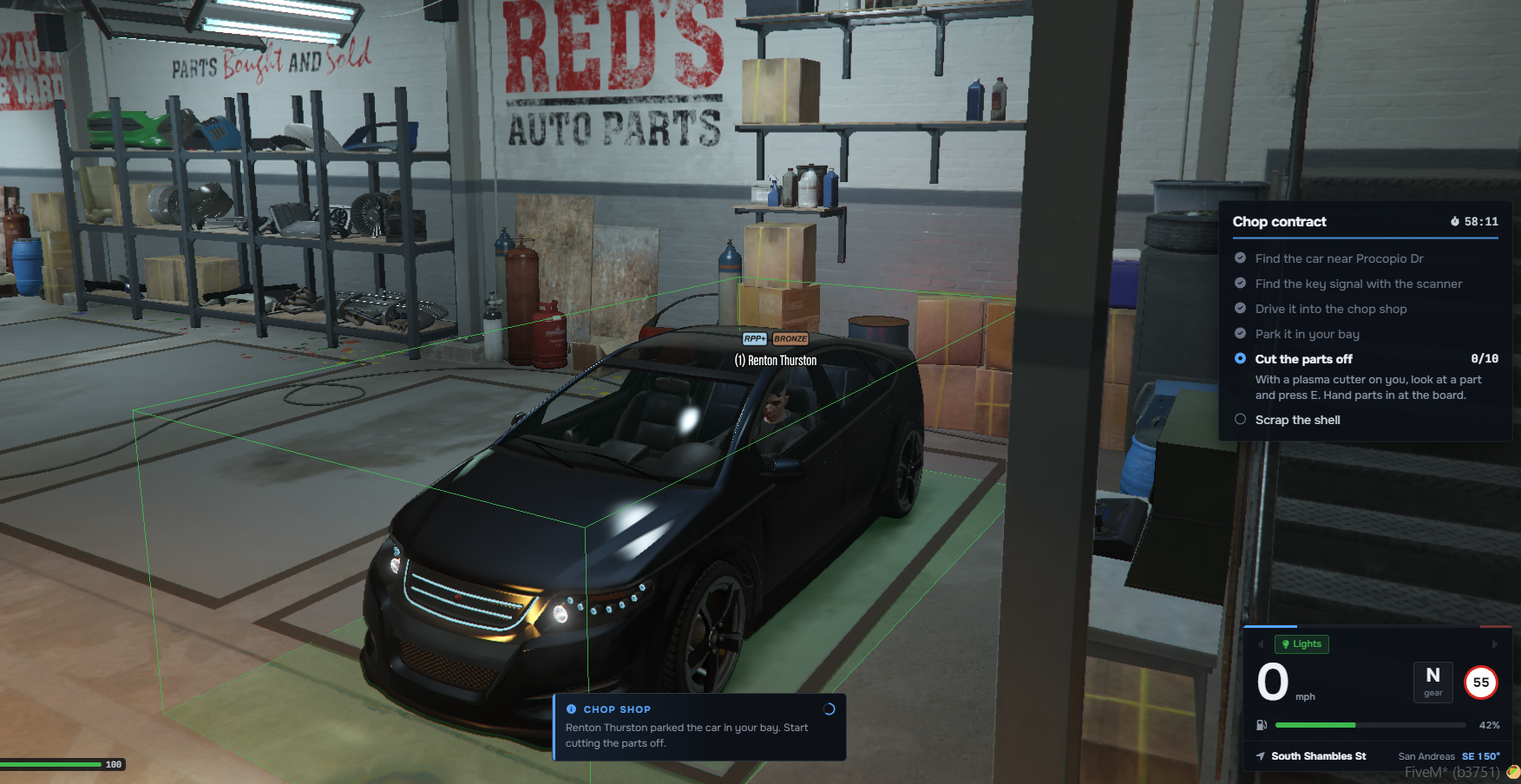
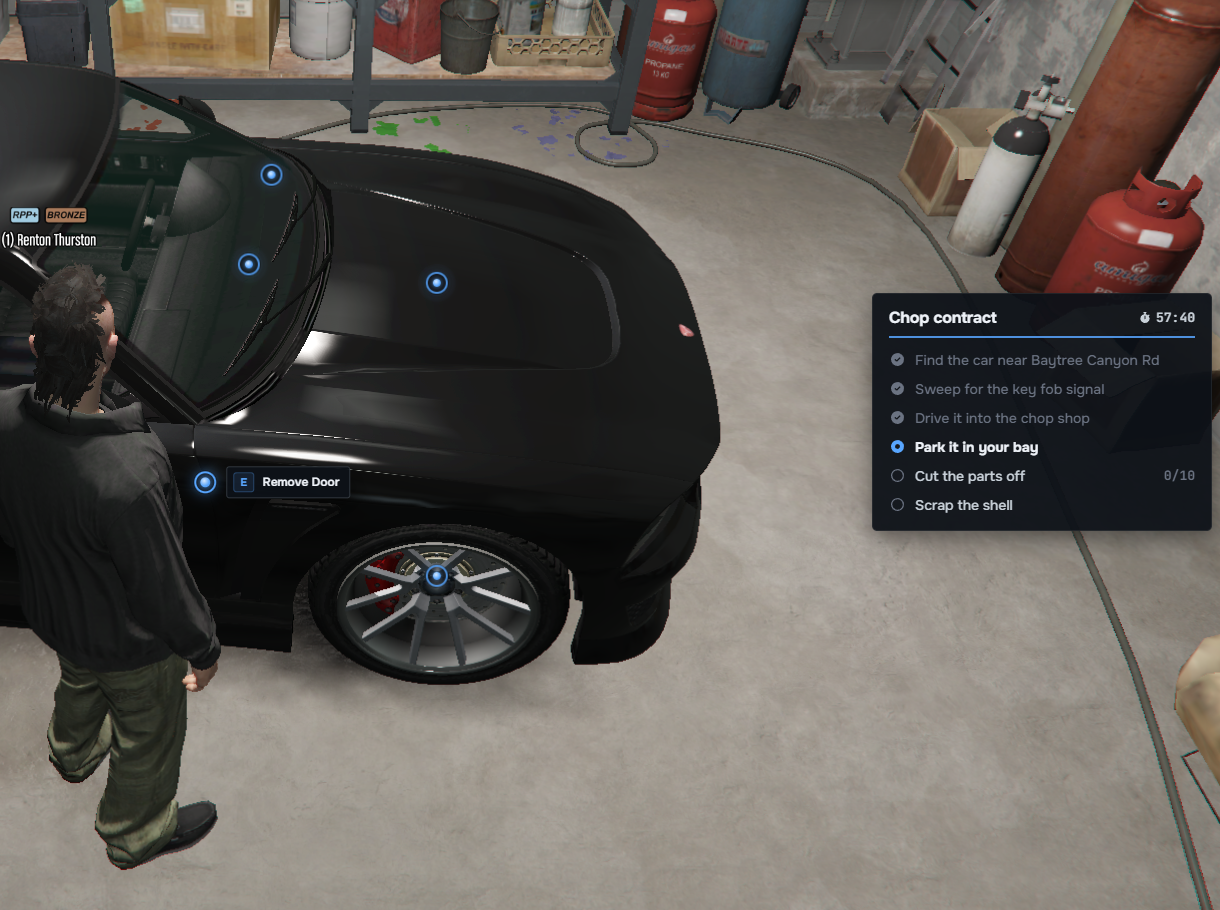
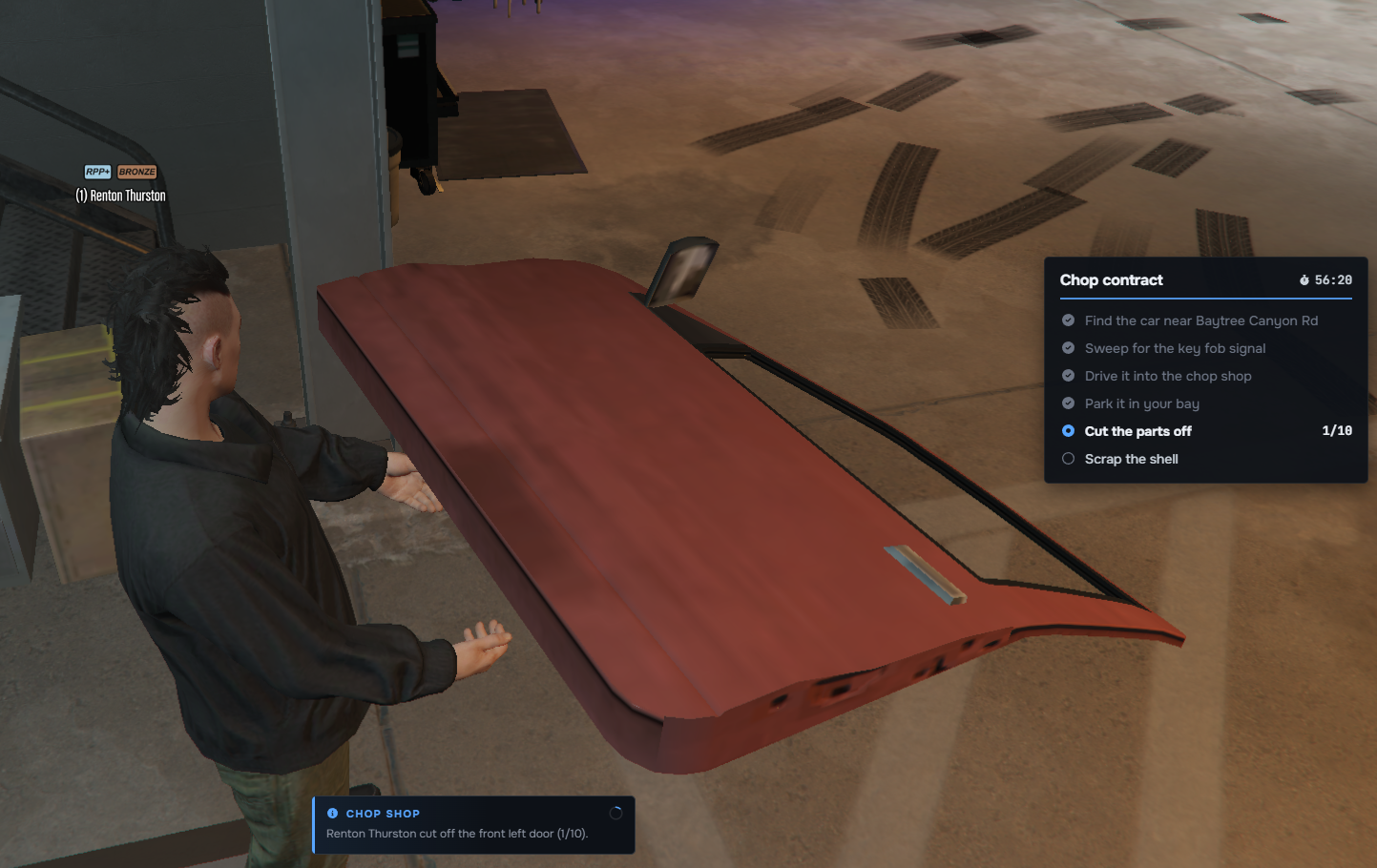
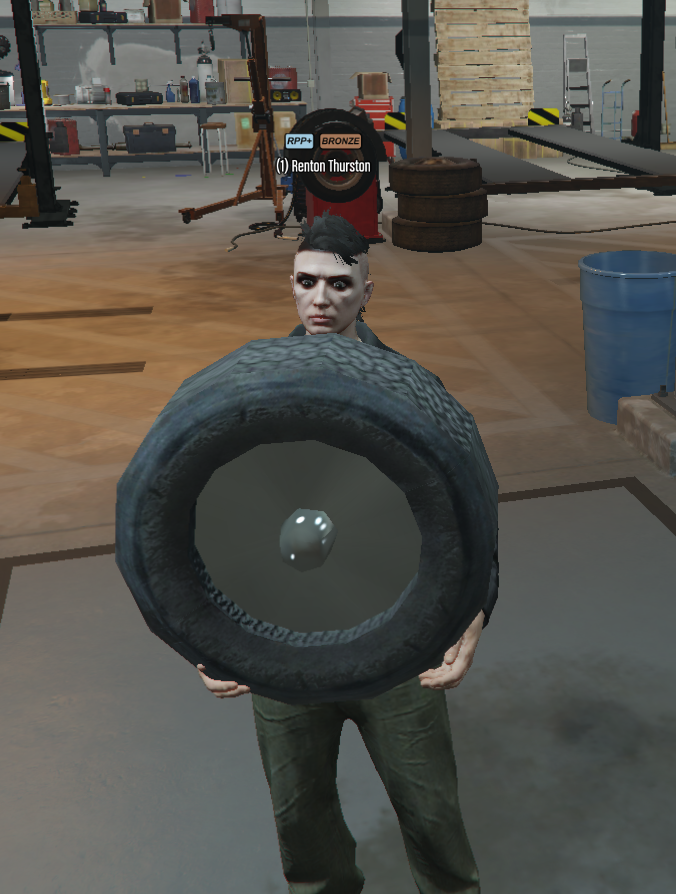
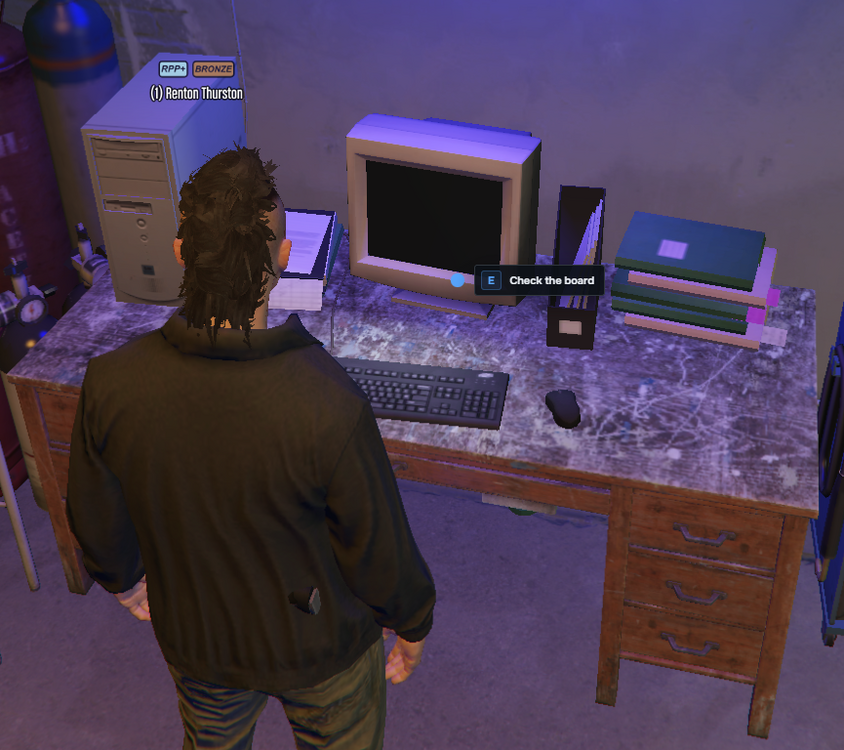
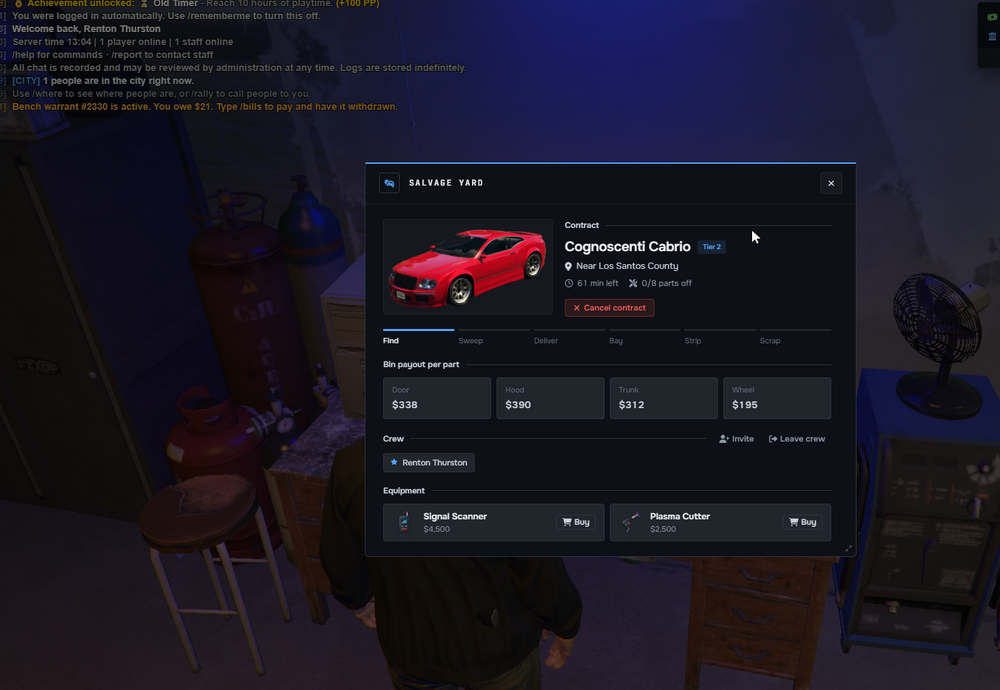
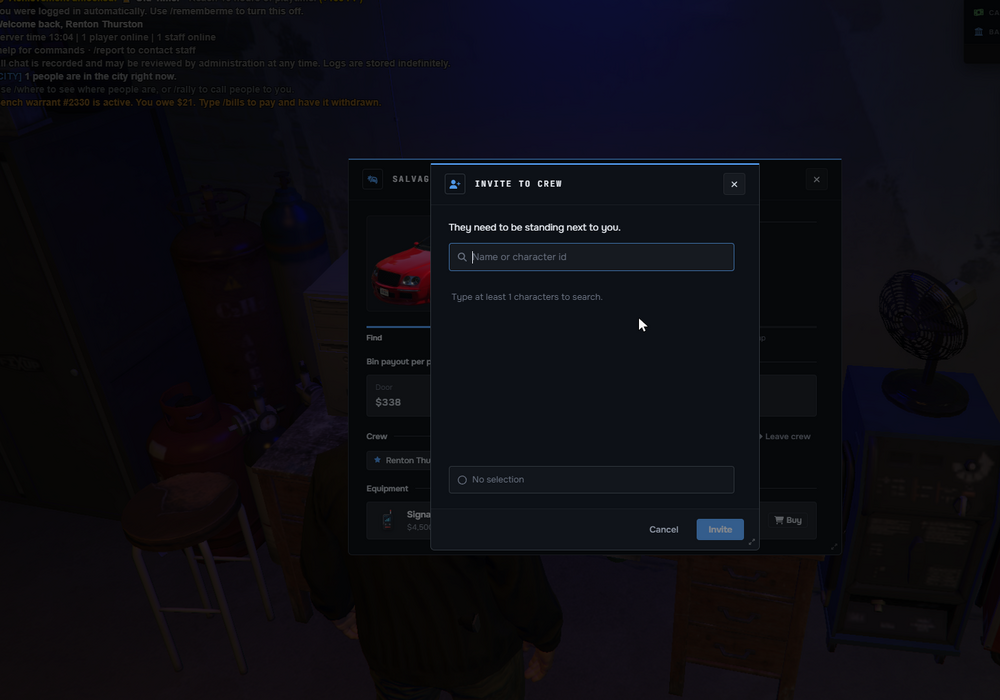
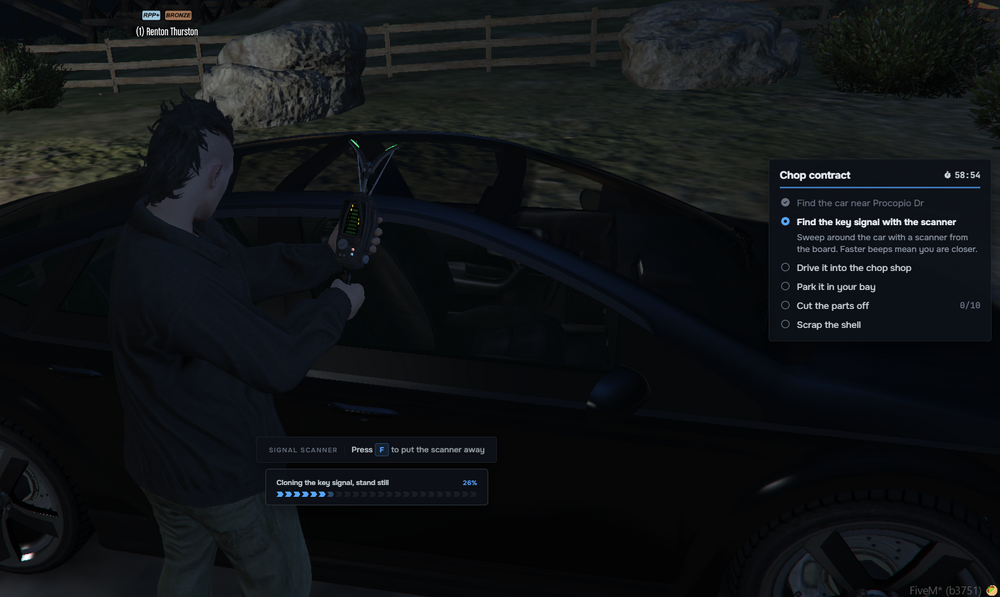
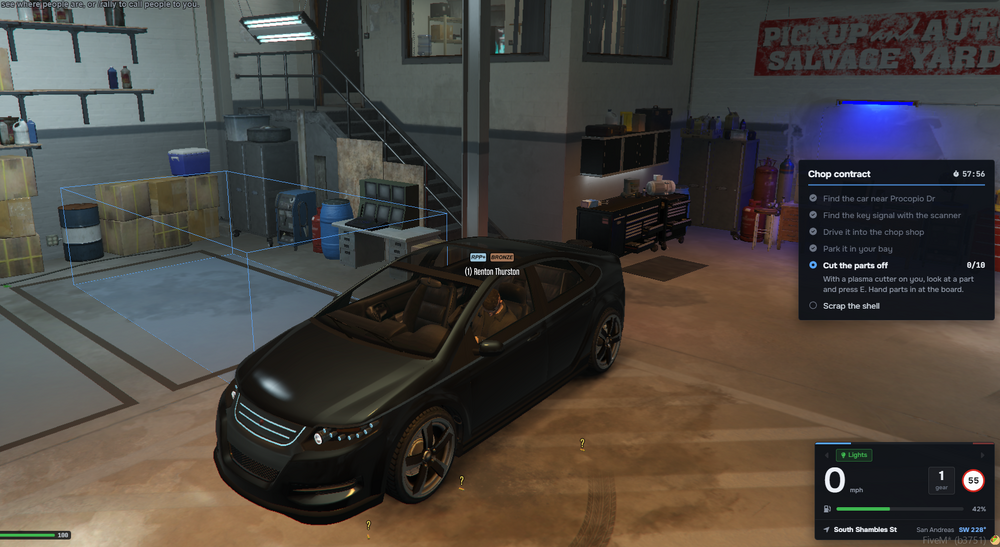
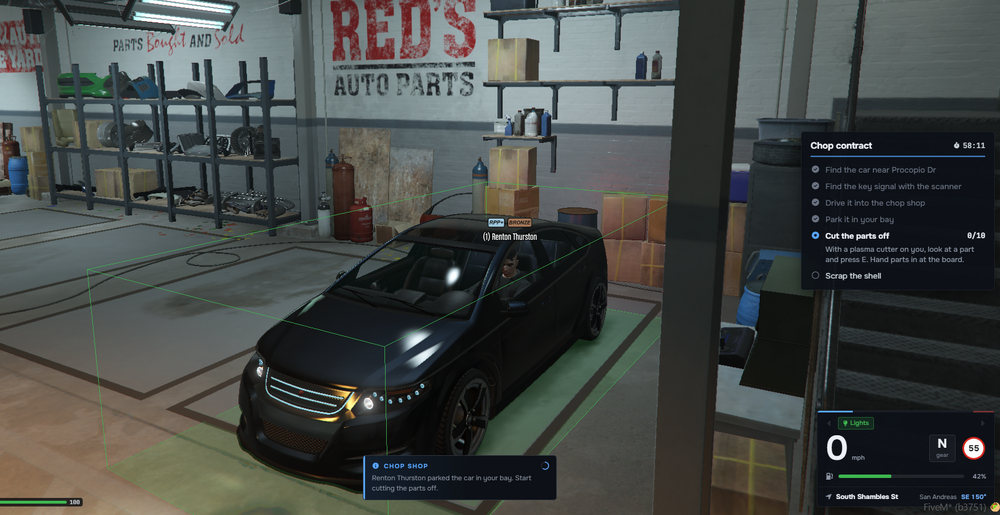
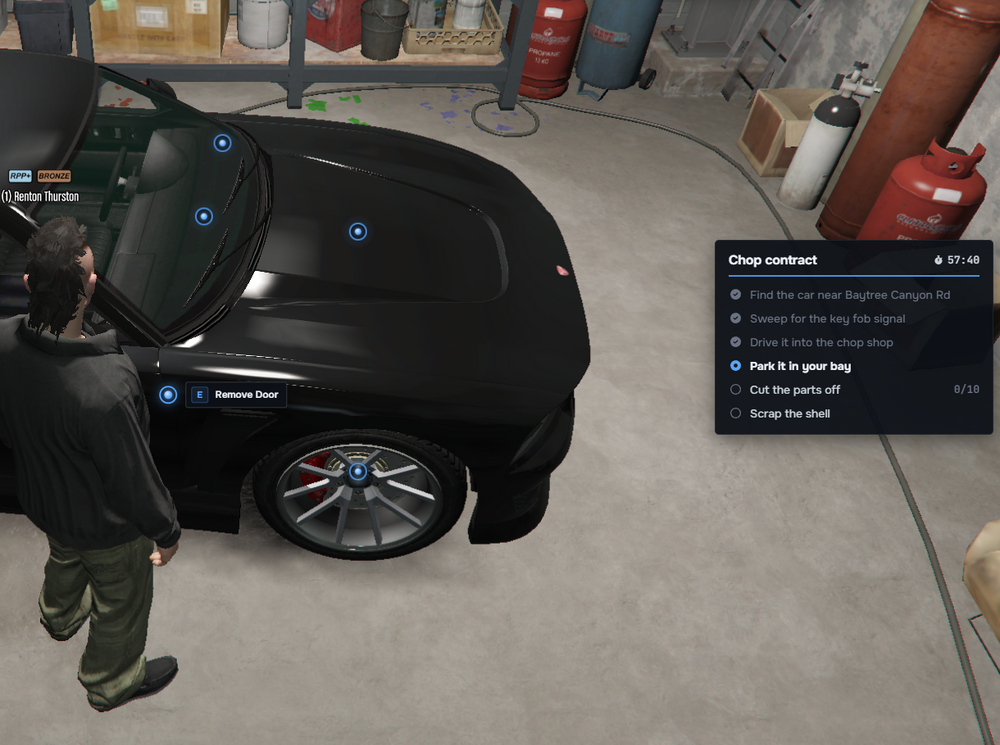
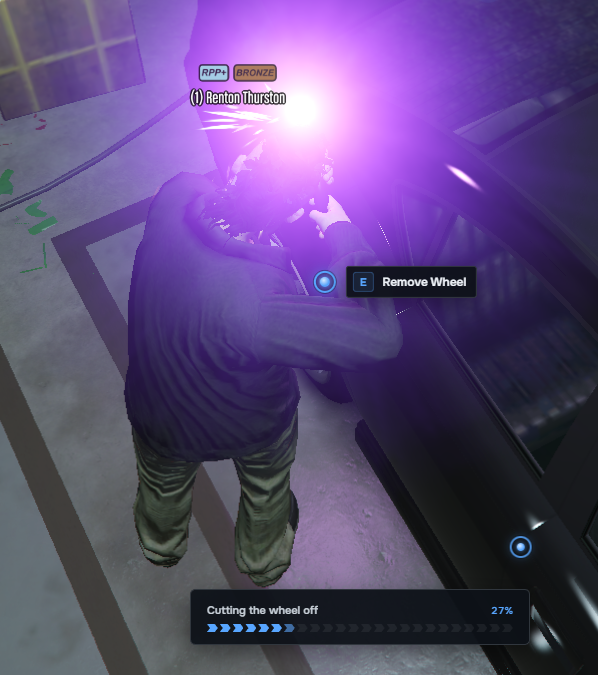
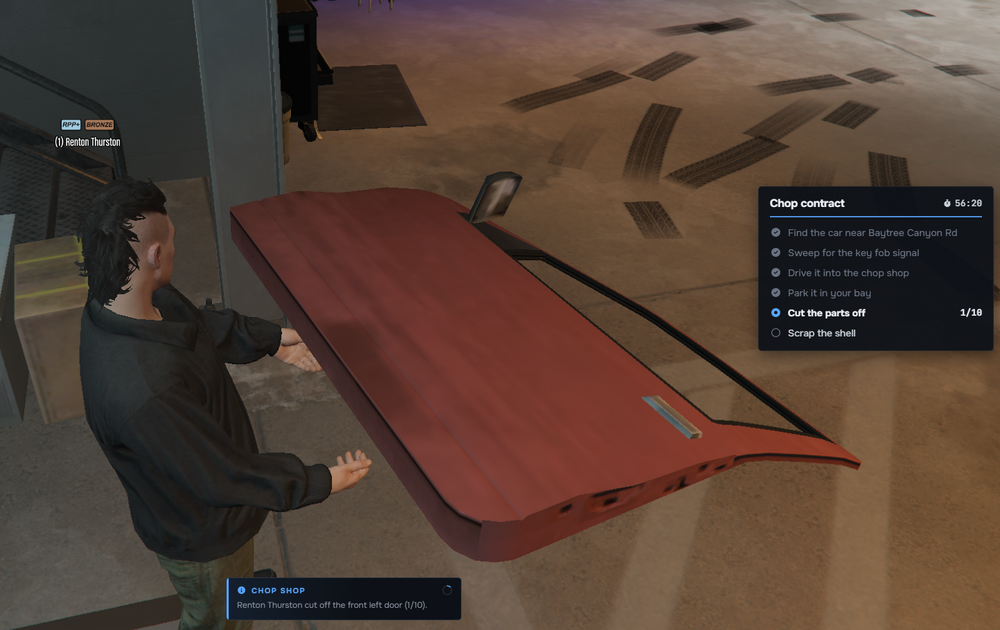
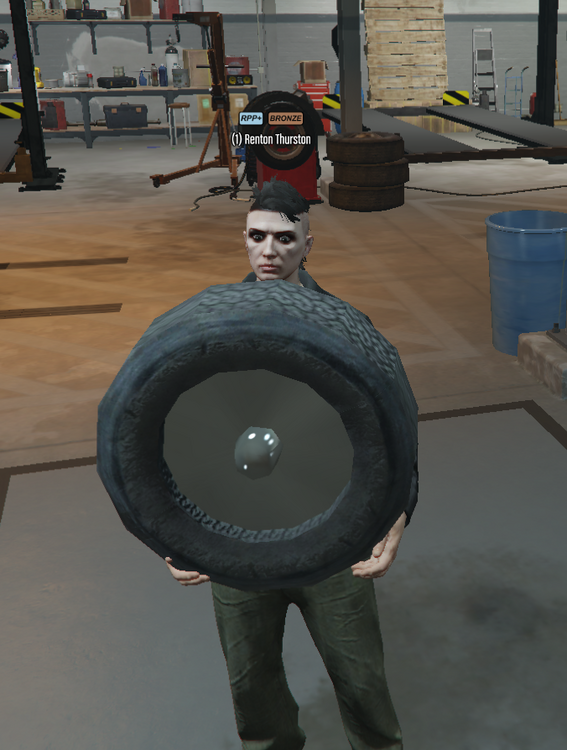
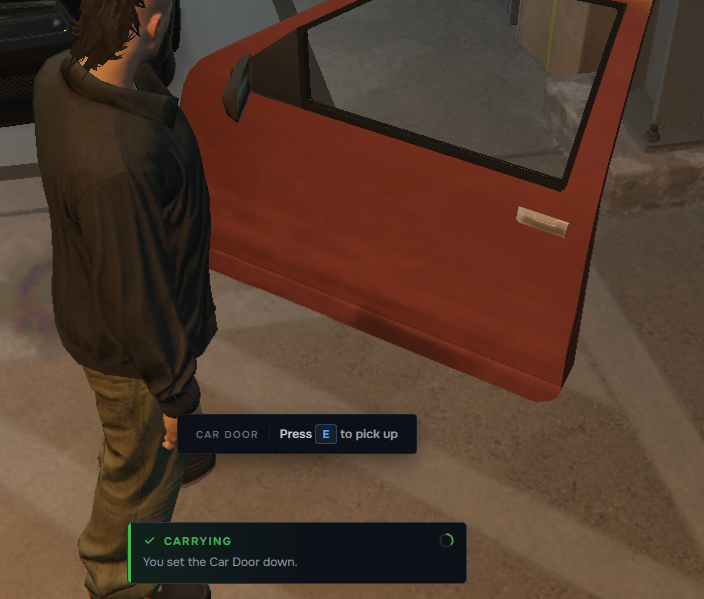
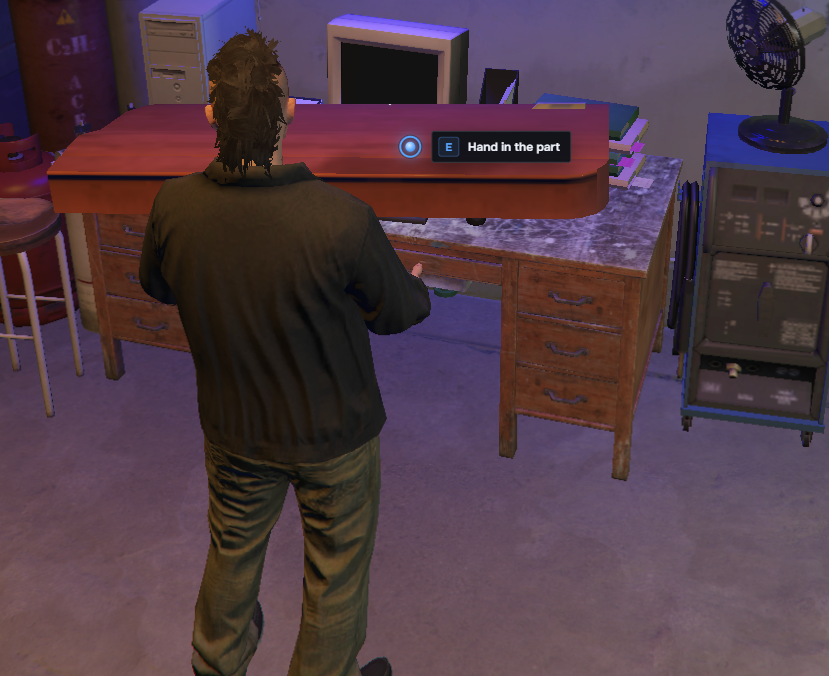
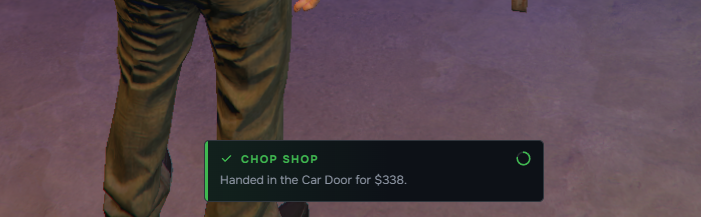
Chop Shop ReworkCrew contracts at five salvage yards Hello everyone, Here is a first look at the reworked chop shops. The old chop shop and its cut-off saw are gone. We rebuilt it from scratch as a proper crew job. You hunt down a car, clone its key, bring it to your yard and take it apart piece by piece. This post explains how it all works. The short versionThere are five salvage yards: Paleto Bay , Sandy Shores , La Puerta , Strawberry and Murrieta Heights . Each yard belongs to a faction, and its members run contracts from the computer in the yard office. Take a contract and the yard marks a car parked outside a real house somewhere in the county. Then: Find the car. Clone its key signal with a signal scanner. Drive it back to your yard and park it in your bay. Cut it apart with a plasma cutter. Hand the parts in for cash. Scrap what is left. Everything runs through the board and the tracker on the right of your screen, so there are only three commands to know: /mission shows your current objective and time left /endmission leaves the contract, or cancels it if you are the leader /refreshmission redraws your route and tracker if they ever go missing How a contract works The board. Look at the computer in the yard office and press E to check the board. When you are carrying a part, the same computer lets you hand it in. Your contract. The board shows the car, its tier, where it is parked, how long you have left (60 minutes ) and how many parts are off. Below that is what every part pays. Better cars are a higher tier and every part pays more: Tier 2 pays 1.3 times the base price Tier 3 pays 1.7 times Tier 4 pays 2.2 times You buy your equipment here too: a Signal Scanner and a Plasma Cutter . Your crew. The person who takes the contract leads it and can invite up to 3 more people , for a crew of 4 . They have to be standing next to you when you invite them. Everyone in the crew is told when the car is found, unlocked, delivered and parked, and every time a part comes off. Cloning the key. The car is locked and will not start until you clone its key. Take out the signal scanner near the car and walk around it. The beeps get faster the closer you get, and turn into a steady tone when you are on the signal. Press E to intercept it and stand still for 8 seconds while it clones. Once it is done, the car unlocks for the whole crew. The tracker always shows your next step and how to do it. Bringing it in. Drive it into your yard. While you are sitting in the contract car, a box marks your bay. Parking it. Park inside the box and it turns green. The crew is told the car is parked and the tracker moves on to cutting. Picking a part. Every part you can cut has a circle on it. Only the parts on your side of the car show, so walk around it. Look at a circle and press E . Cutting. Cutting takes a few seconds per part and wears your plasma cutter down a little each time. Stay still while you cut. If someone in your crew is already cutting a part, its circle shows it. Progress. Every part that comes off is announced to the crew with a count, so everyone knows how far along you are. Carrying. Parts are carried in your hands, not your pockets. Nobody fits a car door in their jacket. While you carry something you cannot sprint, get into a vehicle or use a weapon, and the weapon wheel is locked. Putting it down. Press F to put a part down and E to pick it back up. Handing it in. Carry the part to the computer and hand it in. Getting paid. You are paid for every part on the spot. When every part is off, scrap the shell to finish the contract and collect the completion bonus . This is not risk freeA contract needs at least one police officer on duty before you can take it. Someone may see you breaking in and call 911 . Even if nobody does, the owner reports the car stolen a little later and the police get the plate. Forensics still works, so wear gloves or you leave prints. When a contract ends, you have to wait 45 minutes before your crew can take another one. If the hour runs out, the contract is gone. Want a yard?Yards are handed out by Illegal Faction Management . If your faction wants one, get in touch with them. Best, Java
-
haii
-
Hello LEO players, Forensics is now live. Up until now the forensic side of policing was barely documented and almost nobody knew what existed or how to use it. We have rebuilt it from the ground up into a proper investigative system, and this post explains everything you need to know. The short version Crime now leaves evidence behind on its own. Fire a gun and you drop shell casings, and you carry gunshot residue on your hands for hours. Bleed and you leave a DNA trace. Touch a car without gloves and you leave fingerprints, on the door handles and on the exact seat you sat in. Police collect that evidence at the scene, bag it, seal it, and take it to the Crime Lab inside Mission Row to be examined. Everything runs through four panels, so there are no long command lists to memorise. /forensics opens the crime scene panel, where you pick up what is around you /forensics id processes a person for prints, DNA and gunshot residue /evbag manages your evidence bags /crimelab opens the lab bench at Mission Row This is deliberately slow One shell casing will not solve a case. Four or more from the same gun gives you a strong chance of identifying the weapon, and only then a chance at a serial number, and only if that gun was bought legally from Ammu-Nation in the first place. That is intentional. A shooting on Monday might give you two casings and nothing else. Another shooting on Thursday with the same gun gives you three more. Put them together and suddenly you have a weapon, a serial, and a registered owner. Cases are meant to be built over days, not closed in ten minutes. The same applies to DNA and fingerprints. They only return a name if that person is already on file, which means printing and swabbing everyone you book actually matters. Every arrest you process today is what makes an unsolved scene solvable next month. Faction leaders Running tests at the lab requires Forensic Clearance on a rank. You set this per rank in /factionmenu, so you decide who in your department is a CSI and who is not. Until you set it on at least one rank, any on-duty officer can use the bench, so nothing is locked out on day one. For everyone else Yes, there is counterplay. Gloves stop you leaving fingerprints. Washing your hands clears residue. Picking your brass up off the floor stops it being found. Guns bought illegally have no paperwork to trace. And a serial number can be ground off a receiver, though a lab can still sometimes raise it back out. Read the Full Forensics Guide Every command, item and lab result explained in detail Special thanks to Ruin, who designed this system in detail and shaped how it works. Almost all of the realism in it came from them. Best, Java
-
What you need None of this is bought from a shop. It is not sold in the 24/7, the DIY store or anywhere else. Evidence Bags are taken from the boot of any police vehicle, or from inside a government building. Stand at either and type /supplies. You will be topped up to five, and you can come back for more any time. Forensics Kit comes from your faction loadout. Required for everything on the scene panel. GSR Test Kit comes from your faction loadout. Used for swabbing suspects. Latex gloves. Wear them. See the warning under Step 1. Kits are configured per rank in the loadout editor, so each faction builds its own CSI kit. If yours does not have them, speak to your command staff. Step 1: Work the scene /forensics A panel opens listing what is near you. Click a row to recover it: Cartridge case a spent shell Blood stain swabbed with a cotton swab Vehicle exterior dusts the door handles Vehicle interior dusts the seats Prints off a firearm lifts marks from a gun you are already carrying. You keep the gun Book in the firearm puts a gun you are carrying into an evidence bag. You lose the gun to evidence Bag a firearm off the ground books a dropped gun straight into your bag without you ever touching it Use the ground option whenever the gun is not already yours. If you press E to pick a weapon up, the game records your own prints on the grip and slide. A weapon only keeps the last ten marks, so a careless officer can push the suspect's print off the record entirely. Gloves prevent this, bagging it off the ground avoids it altogether. Greyed out rows tell you exactly why, for example "Nearest cartridge case is 4.2m away". Everything you pick up goes into your pocket as loose evidence. Firearms are the exception, they go straight into an open bag, so label a bag first. Shortcuts if you prefer typing: /forensics casing, /forensics blood, /forensics vehicle, /forensics interior, /forensics weapon, /forensics firearm, /forensics ground Step 2: Process a suspect /forensics id or /subject id Shows you what is already on file for that person, then lets you: Take prints filed straight to the database Take DNA a buccal swab, filed straight to the database Swab for GSR produces a physical swab you must bag Important distinction. Prints and DNA are reference samples. They go into the database, there is nothing to carry, and taking them twice changes nothing. A GSR swab is physical evidence, it goes in your pocket and needs bagging like anything else. A reference sample is what turns an unknown profile into a name. If nobody has ever been swabbed, the lab can still link two scenes together, it just cannot tell you who. The old names still work: /fingerprint, /takedna, /checkgsr all open this panel. Step 3: Bag and seal /evbag Click New Bag and name it after the scene, for example Hawick-23/07/2026 Click Add evidence and tick only the items from that scene Click Seal One bag per scene. Casings from two different scenes in the same bag come back as a mismatch and tell you nothing. If you get it wrong you can break the seal and take items back out, but the broken seal is permanently recorded. Bag a firearm on its own if you want touch DNA. If a bag holds both blood and a gun, the DNA test works the blood and ignores the grip. The report will say so. You can also discard a bag entirely. If it has contents, everything inside is destroyed, it is logged, and people nearby see you do it. Out of bags? Head back to a police vehicle or a government building and use /supplies again. Aliases: /evseal, /evopen Step 4: Run the tests Go to the Crime Lab inside Mission Row. Type /gps lab to set a waypoint. Stand on the blue marker, then: /crimelab Pick a case file, pick a bag, pick a test. You do not have to stand and wait, the result arrives in chat and in Recent Findings when it is done, and the bench refreshes itself the moment it finishes. TestNeedsTime Gunshot ResidueGSR swabs3 min Latent PrintsLift cards, or a bagged firearm4 min BallisticsShell casings, plus a firearm to compare against6 min Serial RestorationA firearm7 min Narcotics ProfilingSeized drugs8 min DNABlood swabs, or a bagged firearm9 min Up to three tests can run at once. Each test can only be run once per bag, because re-testing the same evidence gives the same answer. Add more evidence to the bag if you want another attempt. Officers without clearance can still send a bag to the lab from /evbag. It waits in the queue for a tech to pick up, so evidence never sits idle because nobody is on shift. Running a test requires Forensic Clearance on your rank, set by command staff in /factionmenu. What the results actually tell you Ballistics The calibre, always, from a single casing Whether all the shells came from one gun or several What kind of gun it was, on a sliding chance: 1 casing is unlikely, 4 or more is a strong chance Roughly 1 in 5 casings is too damaged to be any use If the gun was bought legally, a further chance at the serial number and the original purchaser Put a recovered gun in the same bag as the casings and the lab test-fires it, telling you either that those shells came from that exact gun, or that the gun is excluded That last point matters. The registry tells you who bought the gun, not who fired it. It may have been sold, lent or stolen since. DNA Three or more swabs from the same pool gives a good chance of a usable profile Fresh blood is better than dried, so get there quickly A profile only returns a name if that person has been swabbed before An unidentified profile is still recorded, and will link two scenes to each other Blood type narrows the field but will never name anyone on its own A bagged firearm can be swabbed for touch DNA off the grip. Gloves stop fingerprints but not skin cells, so this can name someone the print test missed A gun passed between hands carries everyone who held it, and touch DNA cannot tell you when Fingerprints Names anyone whose prints are on file A print proves someone touched something. It does not prove when, or that they did anything wrong Vehicles keep the last 5 marks per surface, weapons and items the last 10 A bagged firearm is processed for grip and slide marks automatically, you do not need a separate lift Leather and driving gloves leave a texture mark instead of a print, and the report names the glove type. Nitrile leaves nothing at all Gunshot Residue Reported as trace, moderate or heavy Fades over about four hours and is destroyed by washing Standing close to someone who fires a gun leaves residue on you too, so it is never proof on its own Serial Restoration A ground-off serial can often be raised back out of the metal, but not always Narcotics Profiling Purity, the cutting agents used, and the product line the batch came from Every earlier seizure that came from the same cook, naming the case it was logged under It cannot tell you where a batch was made on its own. Seize product inside a lab during a raid and that product line is tied to the address from then on Heavily re-cut street product often has no readable profile left How long evidence lasts Shell casings stay on the ground for around 12 hours Blood lasts around 3 hours and degrades the whole time Collected evidence never expires once it is in your inventory or a bag Database records prints, DNA and lab findings are permanent For criminals /gloves style stops you leaving fingerprints. Clothing gloves count, not just latex. Leather and driving gloves still leave a texture mark that tells the lab you were gloved Gloves do not stop touch DNA. Handling a gun leaves skin cells on the grip whatever you are wearing /washhands scrubs off gunshot residue Pick your brass up with E. No casings means no ballistics Do not leave the gun. A dropped weapon can be bagged off the ground without anyone touching it, and it carries its own serial, its firing marks and everyone who held it /scratchserial grinds the serial off a gun. Untraceable to sell, but a lab still recovers it about half the time Buy illegally. Guns bought from Ammu-Nation have a record that leads back to the original buyer Keep your supply separate. Merging two batches of product blends both signatures into one bag, and the lab reads every source that went into it Gloves do not stop casings, blood, residue or touch DNA. They only stop prints. Command reference CommandWhat it does /suppliesTake evidence bags from a police boot or government building /forensicsCrime scene panel /forensics idProcess a person /forensics groundBag a dropped firearm without touching it /evbagEvidence bags /crimelabThe lab bench /gloves stylePut gloves on or take them off /washhandsClear gunshot residue /scratchserialDeface a serial number /gps labWaypoint to the Crime Lab Every one of these is also listed in /help under the police section, numbered in the order you use them. System designed by Ruin. Built by @java.
-
Approved.