




VatoLoco
Members
-
Joined
-
Last visited
-
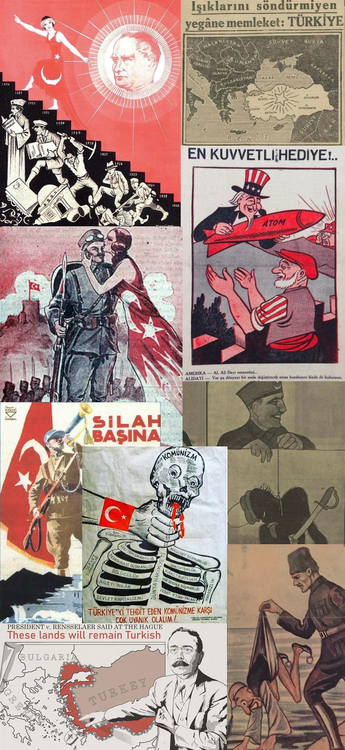
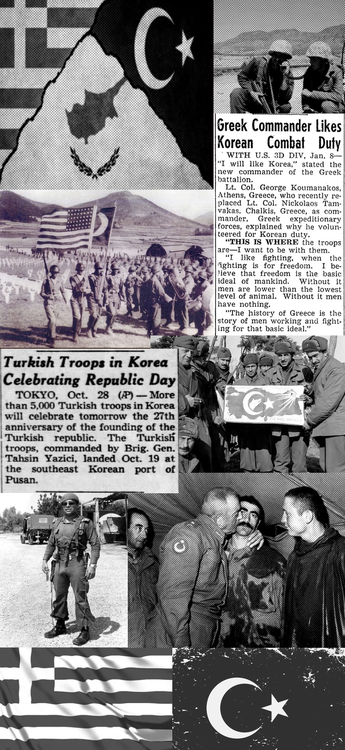
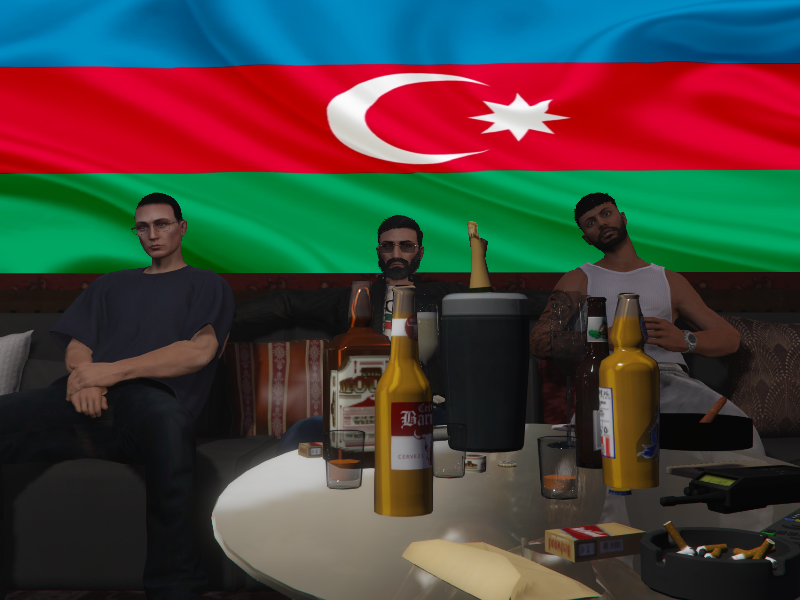
The Aegean Connection, also known as the Greco-Turkish Mafia, was founded by two men whose lives had been permanently shaped by war, loss, and displacement. During the height of the Cold War, increasing pressure from NATO and the European powers, combined with the United States intense opposition to communism and its strategic interests in the oil rich regions of the Middle East and the Mediterranean, contributed to thousands of Greek and Turkish men being deployed far from their homeland. Many never returned. Those who fell were remembered as martyrs and heroes, while those who survived often returned carrying wounds that could not be seen. For many veterans, the transition back into civilian life proved to be more difficult than the war itself. Post traumatic stress, depression, and the psychological consequences of combat made it increasingly difficult for some to reintegrate into society and establish themselves in the civilian workforce. The skills they had learned on the battlefield had little place in ordinary life, leaving many veterans isolated and without a clear future. Among those who grew up in the shadow of that conflict were Haydar "Shah" Bektaş, the son of a Turkish veteran who had fought on the northern side of Cyprus, and Vaso "Rum" Karaides, the son of a Pontic Greek veteran who had served on the opposing side. Both men grew up hearing stories of a war that had shaped their fathers' lives and left a lasting mark on their families. Their fathers had fought against one another, representing two sides of a conflict that had divided communities and left deep scars across Cyprus. Although Haydar and Vaso themselves had never fought in the conflict, its consequences followed them throughout their childhoods. They grew up with different versions of the same history, carrying the weight of a conflict they had inherited rather than chosen. Neither man would remain untouched by the legacy of that war. Unable to fully escape the consequences of their past, the two men eventually left their homeland through separate paths. Their journeys first took them into Western Europe before ultimately leading them across the Atlantic to the United States of America, where they settled in the state of San Andreas, in the city of Los Santos. Their meeting was anything but planned. Through circumstances, connections, and the unpredictable nature of life in a foreign country, the two eventually crossed paths. Despite coming from families whose fathers had stood on opposing sides of a conflict that had left deep scars on both nations, they quickly recognized something they had rarely encountered before: a man who understood exactly what the other had been through. As they spent more time together, they began to realize that the differences between their peoples were not as great as they had once believed. Greek and Turkish cultures share many similarities, particularly in family values, traditions, hospitality, food, social customs, respect for elders, and the importance placed upon loyalty and community. In many ways, they were far more alike than they were different. To them, the greatest dividing lines were ultimately language and religion. Beyond those differences, they saw two cultures with remarkably similar foundations and values. In America, however, even these old divisions began to lose some of their importance. They were no longer standing on opposite sides of the Mediterranean. They were now immigrants in a foreign country, surrounded by people who knew little of the history that had divided them. The old conflicts belonged to another generation and another continent. America became the common ground between them and the dollar became the common language. Neither man had come to Los Santos to continue the conflict their fathers had left behind. They had come to survive, to rebuild their lives, and ultimately to create something of their own. They understood that in America, opportunity was not necessarily determined by where a man came from, but by what he was willing to build. The pursuit of money, power, and influence gave them a common purpose. The American Dream, once something they had only heard about from afar, became something they intended to pursue by whatever means necessary. Their shared experiences of growing up under the shadow of conflict became the foundation of an unlikely partnership. Instead of continuing the divisions inherited from their fathers on American soil, both came to understand that Los Santos represented something different an opportunity for a new beginning. They realized that America was not a battlefield, and that the old divisions between Greek and Turkish men did not have to dictate their future. The war had already taken enough from their families. What remained was the knowledge, discipline, connections, and experience they had inherited from the generation before them. Slowly, the two began building a network around themselves. Former soldiers, veterans, immigrants, and like-minded individuals from their respective homelands were brought into their circle. What initially began as a small network of people bound together by shared experiences gradually developed into something far more ambitious. The lessons passed down from their fathers provided them with an understanding of hierarchy, discipline, logistics, organization, and leadership. Their connections within the Greek and Turkish communities allowed them to establish relationships, while their understanding of conflict and the experiences of the generation before them provided them with the means to navigate the darker side of Los Santos' underworld. Over time, The Aegean Connection evolved from a small circle of immigrants and their associates into an increasingly sophisticated criminal organization. Greek and Turkish heritage became intertwined within the faction, not as a continuation of the wars of the past, but as the foundation of a new identity built in a foreign land. The organization came to represent an unusual union: two cultures that had once stood against one another, united by their similarities, their shared history, their lives as immigrants, and their pursuit of the American Dream. The name “The Aegean Connection” would eventually become synonymous with the organization itself a symbol of ambition, power, heritage, and the idea that two historically divided peoples could build something together far beyond the conflicts that once separated them. What began with two sons carrying the legacy of their fathers would ultimately become the foundation of a criminal empire one built not upon the wars of the old world, but upon the opportunities of the new one. Out of Character
.thumb.png.f209ebd6ef6a2bf451c3e60e65bd3951.png.a296a82b15d9ab216796ebbf3fe3ae71.png)



.png.4ea2e40b8cee05360f73b11b72e8cc09.png)

(1).png.624805536abc020e43920c630d1c418d.png)
.png.4364d4ea6cb0e89141e38fcdcd96a19c.png)
(1).png.363525991b26ece6dd050110bed621af.png)
(1).png.fa861518583727655a04d9babb6a1b45.png)
.png.8ce17001745b4cab9035f81f061115ce.png)


Account
Navigation
Search
Configure browser push notifications
Chrome (Android)
- Tap the lock icon next to the address bar.
- Tap Permissions → Notifications.
- Adjust your preference.
Chrome (Desktop)
- Click the padlock icon in the address bar.
- Select Site settings.
- Find Notifications and adjust your preference.
Safari (iOS 16.4+)
- Ensure the site is installed via Add to Home Screen.
- Open Settings App → Notifications.
- Find your app name and adjust your preference.
Safari (macOS)
- Go to Safari → Preferences.
- Click the Websites tab.
- Select Notifications in the sidebar.
- Find this website and adjust your preference.
Edge (Android)
- Tap the lock icon next to the address bar.
- Tap Permissions.
- Find Notifications and adjust your preference.
Edge (Desktop)
- Click the padlock icon in the address bar.
- Click Permissions for this site.
- Find Notifications and adjust your preference.
Firefox (Android)
- Go to Settings → Site permissions.
- Tap Notifications.
- Find this site in the list and adjust your preference.
Firefox (Desktop)
- Open Firefox Settings.
- Search for Notifications.
- Find this site in the list and adjust your preference.